Why Florida Concrete Needs Sealing
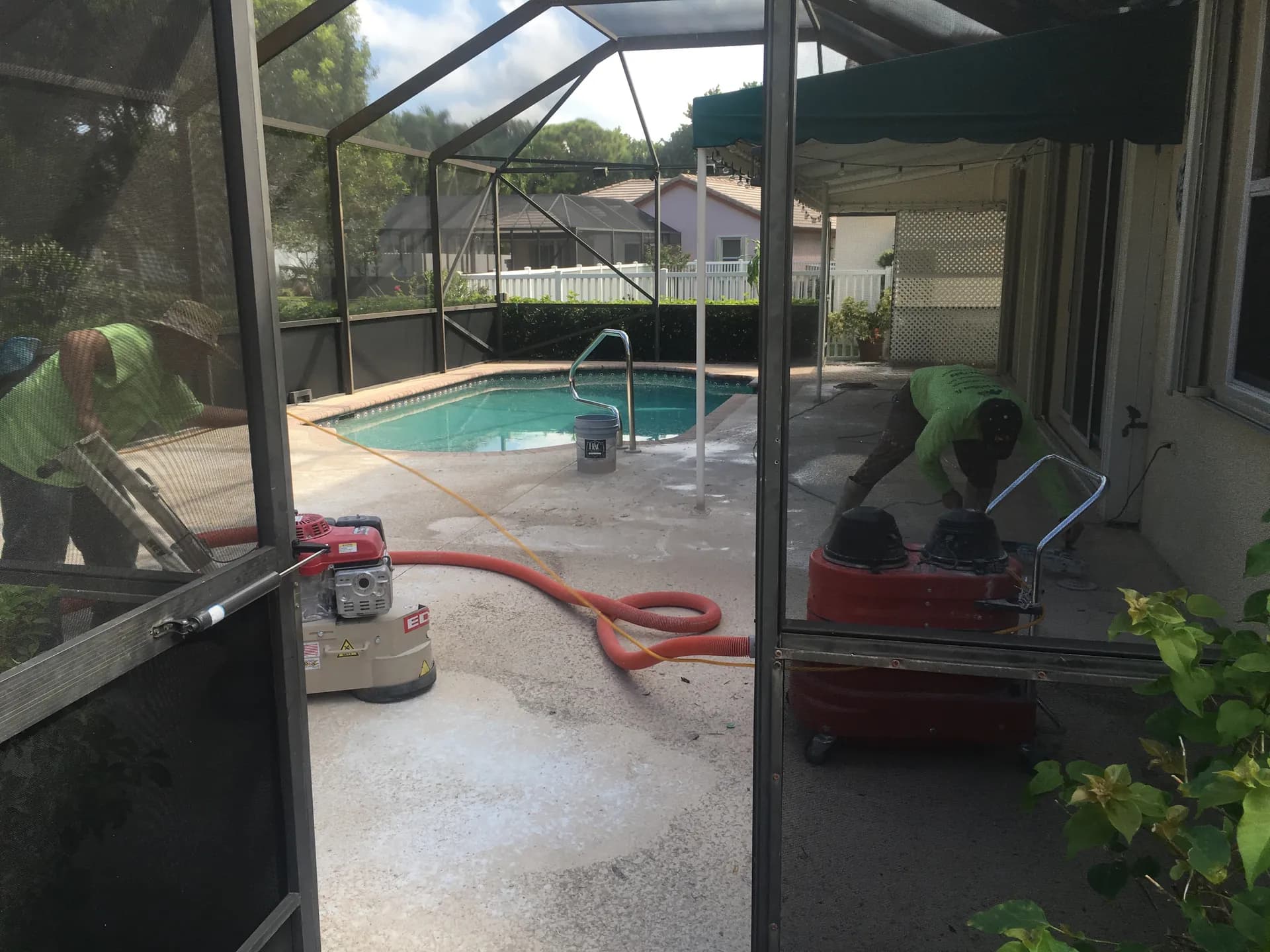
South Florida’s climate is uniquely harsh on concrete. The combination of daily UV exposure, 60+ inches of annual rainfall, high humidity, and occasional salt air creates conditions that break down unsealed concrete surfaces rapidly. Here’s what happens without sealer:
- UV radiation fades colors and breaks down the surface layer (spalling)
- Rain penetrates porous concrete, carrying minerals that cause efflorescence (white staining)
- Trapped moisture promotes mold, mildew, and algae growth—especially on shaded surfaces
- Freeze-thaw isn’t a factor in South Florida, but thermal expansion from 90°F+ surface temps causes micro-cracking
- Unsealed decorative concrete loses its color and pattern definition within 2–3 years
Types of Concrete Sealers: Which One Do You Need?
Not all sealers are the same. The right choice depends on your concrete type and what you’re protecting against.
- Penetrating sealers (silane/siloxane) — Soak into the concrete, invisible finish, best for driveways and plain slabs. $1.50–$2.00/sq ft
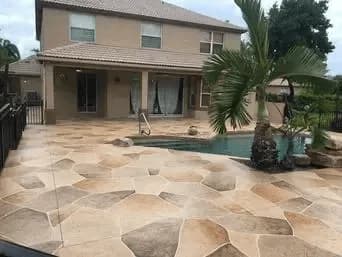
- Acrylic sealers — Film-forming, enhances color, slight sheen. Best for stamped and decorative concrete. $1.50–$2.50/sq ft
- Polyurethane sealers — Thicker film, high durability, glossy or matte. Best for high-traffic commercial areas. $2.50–$4.00/sq ft
- Epoxy sealers — Maximum protection, used for garage floors and industrial surfaces. $3.00–$5.00/sq ft
How Often Should You Reseal in South Florida?
The resealing schedule depends on the sealer type and how much sun and rain the surface gets. Here are the recommended intervals for Palm Beach County:
- Driveways (penetrating sealer): Every 3–4 years
- Stamped concrete patios (acrylic sealer): Every 2–3 years
- Pool decks (acrylic or polyurethane): Every 2 years due to chlorine and water exposure
- Decorative overlays: Every 2–3 years
- Garage floors (epoxy): Every 5–7 years
Professional Sealing vs. DIY
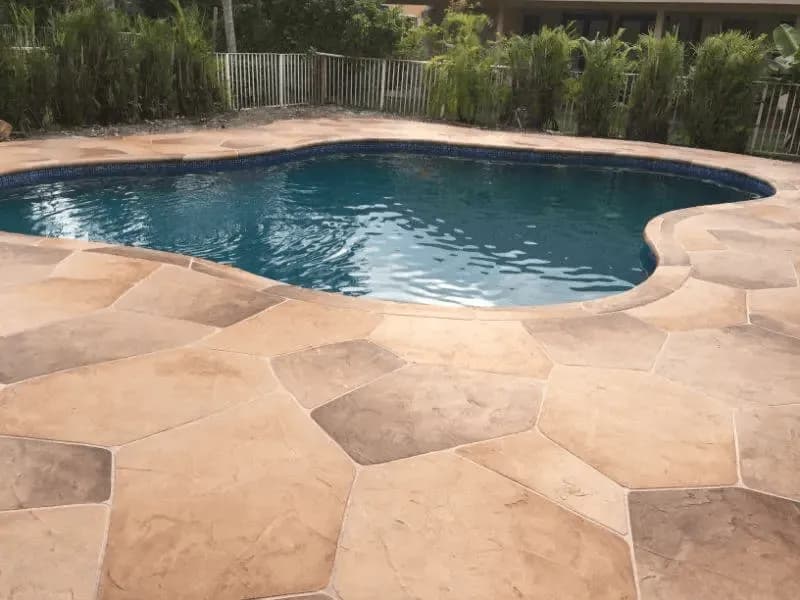
DIY sealing is possible for small, plain concrete areas using a pump sprayer and a store-bought sealer ($0.50–$1.00/sq ft in materials). However, professional application is strongly recommended for stamped, decorative, or colored concrete. Improper application causes bubbling, peeling, white hazing, or uneven sheen—all of which look worse than unsealed concrete. Professional sealing includes surface prep (pressure washing, crack filling), proper sealer selection, and even application with commercial equipment.