Concrete Lifespan by Project Type in South Florida
Different concrete installations have very different expected lifespans. Here is what Palm Beach County homeowners can expect with proper installation and regular maintenance:
- Foundations and footers: 50–100 years (structural concrete, protected from weather)
- Concrete slabs (garage, shed pads): 30–50 years
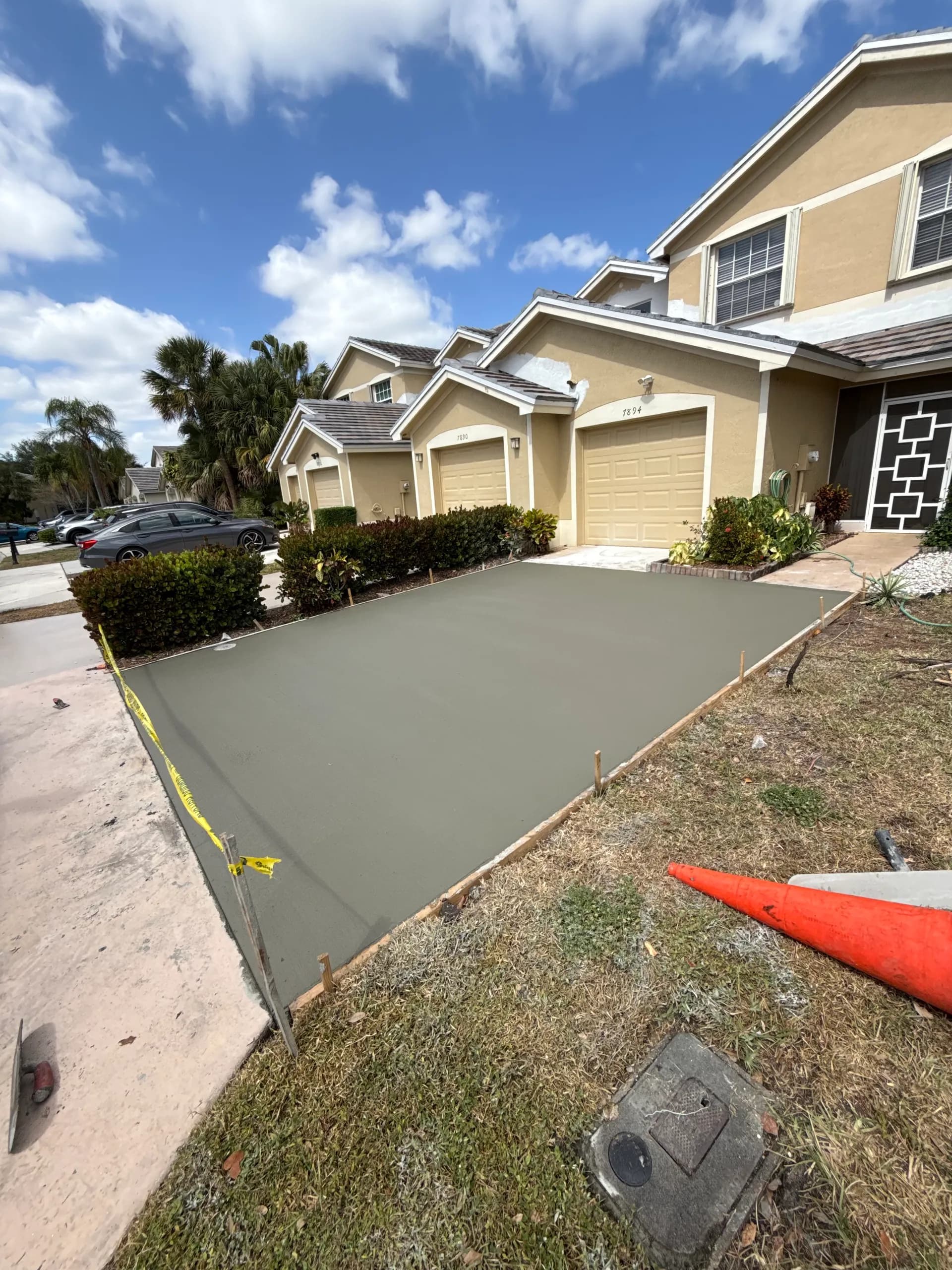
- Driveways (plain broom finish): 25–30 years
- Patios: 25–30 years
- Pool decks: 20–25 years (chlorine and water exposure reduces lifespan)
- Stamped concrete: 20–25 years (surface pattern may need refinishing sooner)
- Decorative overlays: 8–15 years before needing a refresh coat
- Concrete sealer: 2–4 years per application
What Shortens Concrete Life in Florida?
South Florida’s environment is tougher on concrete than most regions in the U.S. These are the main factors that reduce lifespan:
- Sandy soil — Florida’s sandy substrate erodes and shifts more than clay, causing settling and cracking
- High water table — Rising moisture under the slab creates hydrostatic pressure and efflorescence
- Intense UV — Year-round sun exposure breaks down surface coatings and causes micro-cracking
- Heavy rainfall — 60+ inches per year accelerates erosion of the sub-base and washes away joint sand
- Tree roots — Mature oaks, ficus, and palm roots exert significant pressure on slabs
- Salt air — Coastal properties experience accelerated surface degradation from salt exposure
How to Maximize Your Concrete’s Lifespan
The good news is that basic maintenance dramatically extends concrete life in South Florida. Most failures are preventable with these steps:
- Seal every 2–3 years — This is the #1 thing you can do to protect your concrete
- Keep drains clear — Standing water accelerates erosion and promotes mold growth
- Fill cracks early — A $5 tube of concrete caulk prevents a $5,000 slab replacement
- Pressure wash annually — Removes mold, algae, and debris that hold moisture against the surface
- Manage tree roots — Install root barriers near concrete if large trees are within 15 feet
- Maintain proper drainage — Ensure water flows away from slabs, not toward them
When Is It Time to Replace Instead of Repair?
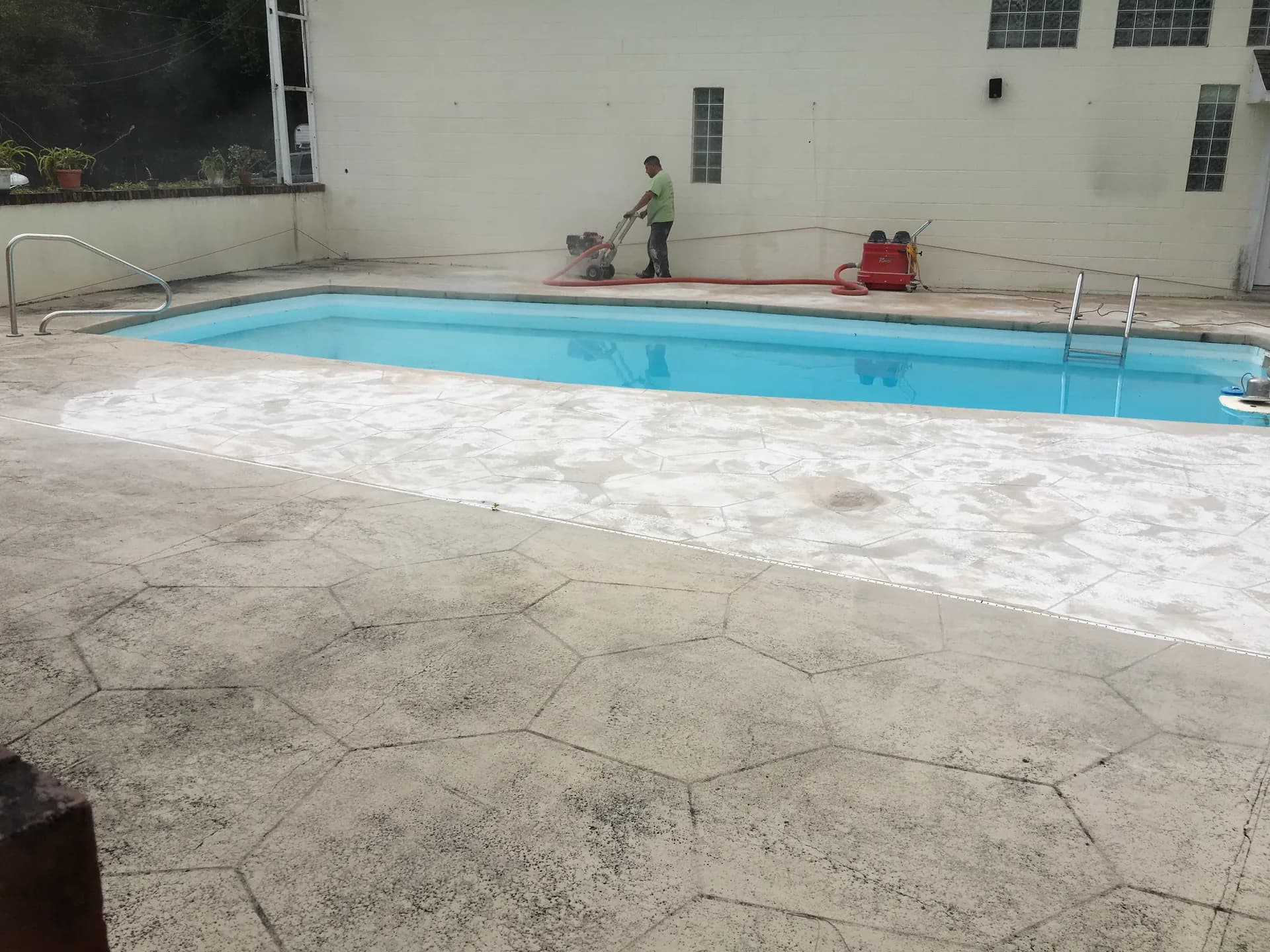
Concrete doesn’t fail overnight—it gives warning signs. When you see widespread cracking (more than 30% of the surface), significant settling or heaving, persistent drainage problems, or multiple areas of spalling, replacement is usually more cost-effective than continued repairs. For concrete over 25 years old showing these symptoms, a full replacement gives you a fresh 25–30 year lifespan with modern mix designs and proper sub-base preparation.