Concrete Sealing in Palm Beach County, FL
Serving Palm Beach County homeowners with expert concrete driveways, patios, pool decks, and repairs.
15+
Years Experience
500+
Projects Completed
2-Year
Warranty
Concrete Sealing That Protects Your Investment
Concrete sealing protects driveways, patios, pool decks, and decorative surfaces across Palm Beach County from UV damage, rain erosion, mold, and staining. We apply penetrating and film-forming sealers matched to your concrete type and exposure level. Properly sealed concrete in South Florida lasts significantly longer than unsealed surfaces. Request a quote and we'll confirm the right sealer, timing, and schedule for your project.
What Is Concrete Sealing?
Concrete sealing is the application of a protective coating or penetrating treatment to concrete surfaces that blocks moisture absorption, UV damage, staining, and biological growth. In South Florida, sealing is not optional maintenance — it's essential protection. Unsealed concrete in Palm Beach County deteriorates 3 to 5 times faster than sealed surfaces due to the region's intense year-round UV exposure, 60+ inches of annual rainfall, high humidity, and occasional salt air. Sealing creates a barrier that keeps water, chemicals, and contaminants from penetrating the concrete's porous surface. For decorative and stamped concrete, sealing also enhances color depth and maintains the pattern's appearance. A professional sealing application costs a fraction of what repair or replacement would cost — making it one of the highest-return maintenance investments a homeowner can make.
Why Florida Concrete Needs Sealing
South Florida's climate is uniquely harsh on concrete. Homeowners in Boca Raton, Delray Beach, West Palm Beach, and throughout Palm Beach County face specific threats that sealing directly addresses:
- UV radiation breaks down the surface layer of unsealed concrete, causing fading, chalking, and spalling within 3 to 5 years
- Heavy rainfall penetrates porous concrete, carrying minerals that cause efflorescence — white staining that's difficult to remove
- High humidity promotes mold, mildew, and algae growth on shaded concrete surfaces, creating slippery and unsightly conditions
- Thermal expansion from 90+ degree surface temperatures causes micro-cracking that worsens without sealer protection
- Salt air near the coast accelerates surface degradation on driveways, walkways, and pool decks in Riviera Beach, Jupiter, and Boca Raton
- Decorative and stamped concrete loses its color, pattern definition, and visual appeal within 2 to 3 years without proper sealing
Our Sealing Process
Professional concrete sealing is more than rolling on a coat of sealer. Preparation determines how well the sealer bonds and how long it lasts. We start by pressure washing the surface to remove dirt, mold, algae, and contaminants that would prevent proper adhesion. Any cracks are filled and repairs are completed before sealing. The concrete must be fully dry — we schedule application during dry weather windows. We apply the sealer using commercial airless sprayers and rollers for even, consistent coverage without puddles, bubbles, or missed spots. Depending on the sealer type, we may apply two coats with proper drying time between applications. The result is a uniform, properly bonded seal that protects your concrete for 2 to 4 years depending on the product and exposure level.
Types of Sealers We Use
Different concrete surfaces need different sealer types. We match the product to your specific surface and conditions rather than using a one-size-fits-all approach.
- Penetrating sealers (silane/siloxane) — Soak into concrete pores without changing appearance. Best for driveways and plain slabs. Invisible finish, 3 to 4 year lifespan.
- Acrylic sealers — Form a thin film that enhances color and adds a slight sheen. Best for stamped and decorative concrete. 2 to 3 year lifespan.
- Polyurethane sealers — Thicker, more durable film. Available in gloss or matte. Best for high-traffic areas and commercial surfaces. 3 to 5 year lifespan.
- Non-slip additives — Mixed into any sealer type for pool decks, walkways, and entries where wet traction is critical
Sealing Schedule for Palm Beach County
South Florida's conditions require more frequent resealing than cooler, drier climates. Here's the recommended schedule for Palm Beach County based on concrete type and exposure. Driveways with penetrating sealer should be resealed every 3 to 4 years. Stamped patios and walkways with acrylic sealer need resealing every 2 to 3 years. Pool decks exposed to chlorine and standing water need resealing every 2 years. Decorative overlays should be resealed every 2 to 3 years. Garage floors with epoxy sealer can go 5 to 7 years between applications. Surfaces in full sun or near the coast may need resealing sooner.
Before and After: The Impact of Sealing
Side-by-side comparisons of sealed versus unsealed concrete tell the story clearly. Sealed driveways in Lake Worth maintain their clean appearance while unsealed sections next to them show fading, staining, and mold growth. Stamped patios in Boynton Beach that get regular resealing retain vivid color for decades, while identical patterns on unsealed surfaces wash out within 2 to 3 years. Sealing won't reverse existing damage, but it stops further deterioration and keeps your concrete looking sharp between major maintenance cycles.
Serving Palm Beach County
We seal concrete throughout Palm Beach County including Boca Raton, Delray Beach, Boynton Beach, Lake Worth, West Palm Beach, Wellington, Jupiter, Palm Beach Gardens, Riviera Beach, and Royal Palm Beach. Whether you need initial sealing on a new pour, resealing on an existing surface, or sealing as part of a larger repair or resurfacing project, we handle it with the same attention to prep and application quality. South Florida's climate demands regular sealing — our 15+ years of experience here means we know exactly which products perform and which fail in this environment.
Recent Projects
Stamped Patio Resealing in Delray Beach
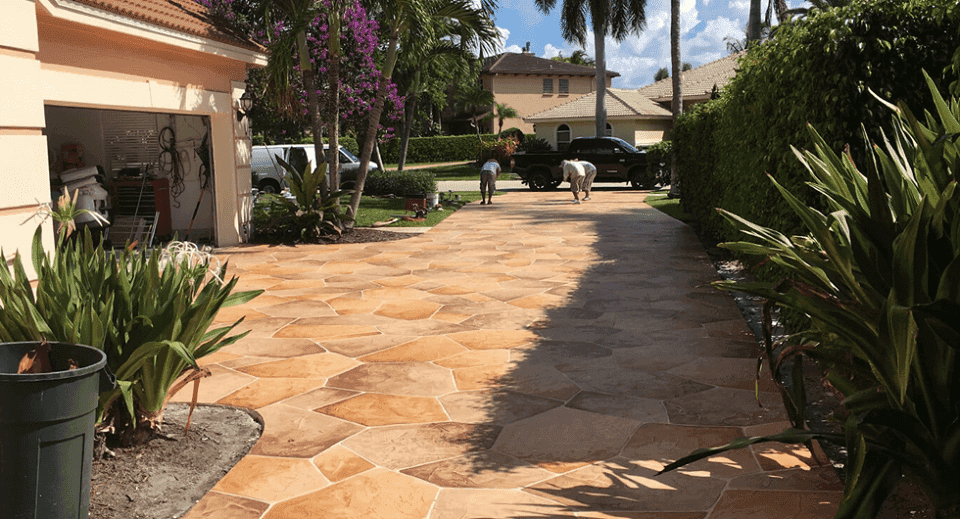
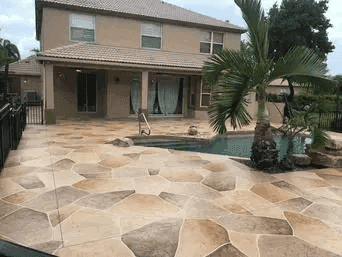
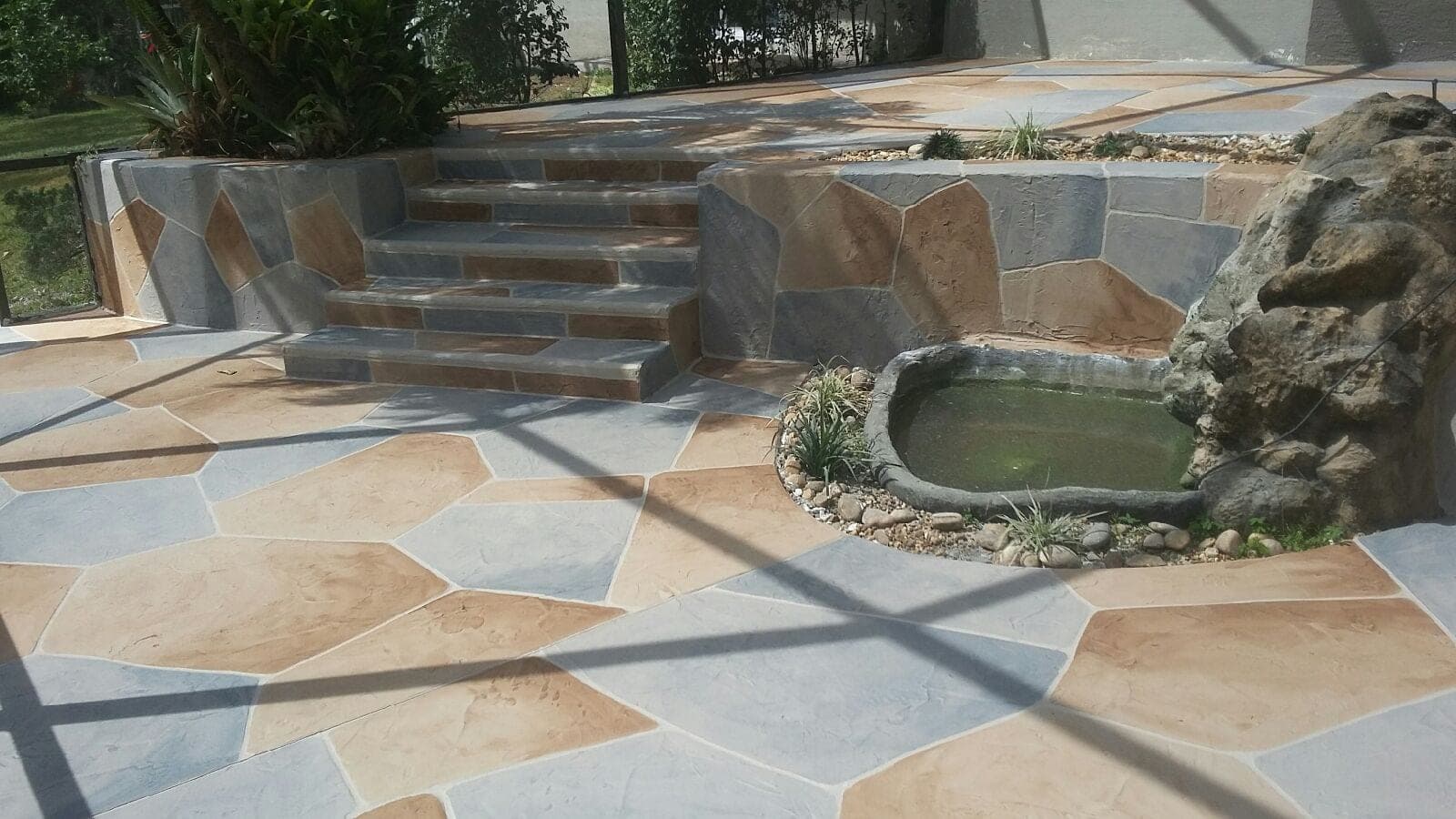
Pressure washed and resealed a 450 sq ft stamped flagstone patio with acrylic sealer and non-slip additive. The previous sealer had failed after 4 years of direct sun exposure. Color was immediately restored after application.
Delray Beach, FLDriveway Sealing in Jupiter
Applied penetrating silane/siloxane sealer to a newly poured 600 sq ft broom-finish driveway. Waited 30 days after pour for full curing before application. Protected against salt air exposure from the nearby coast.
Jupiter, FLPool Deck Sealing in West Palm Beach
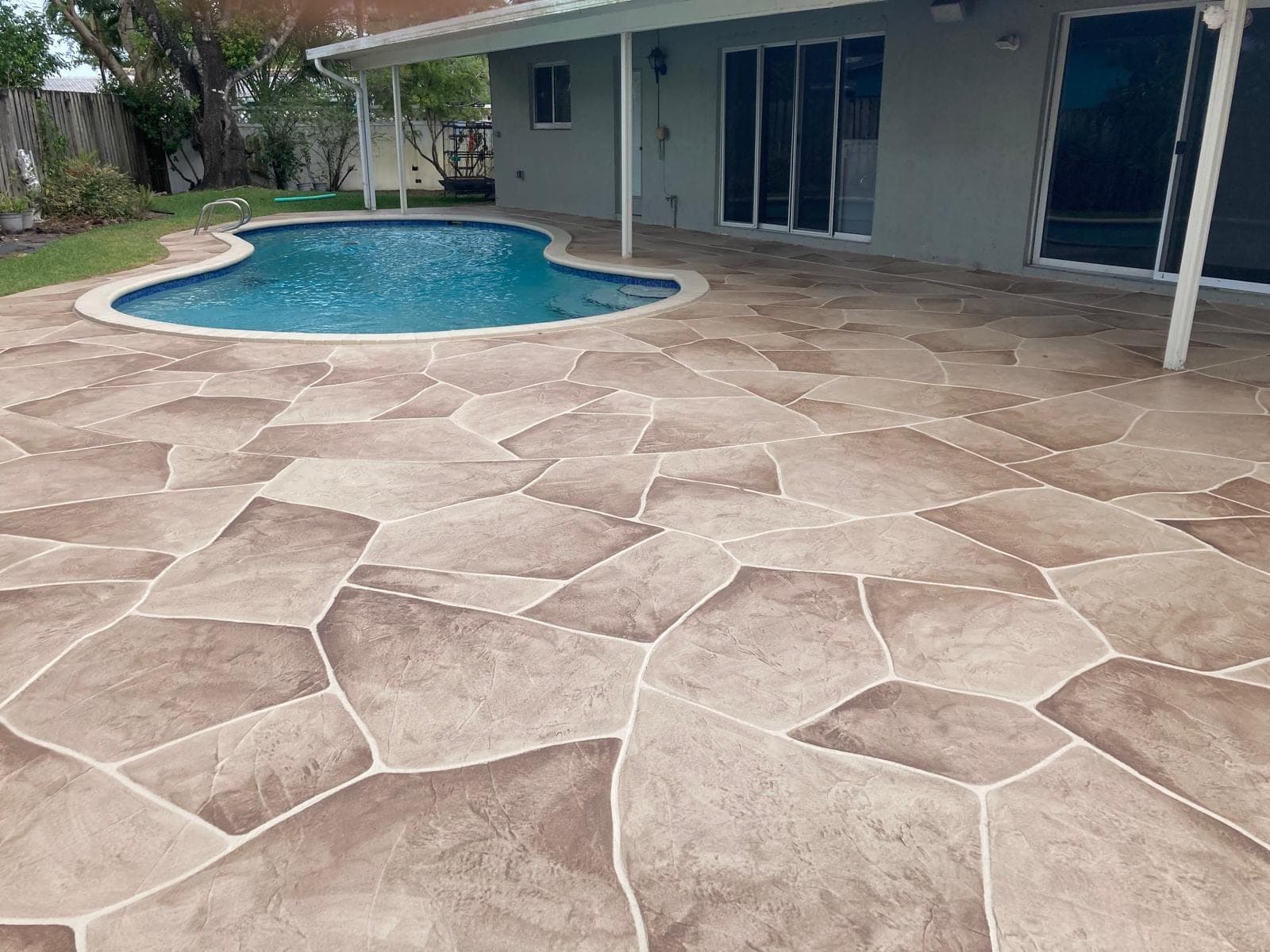
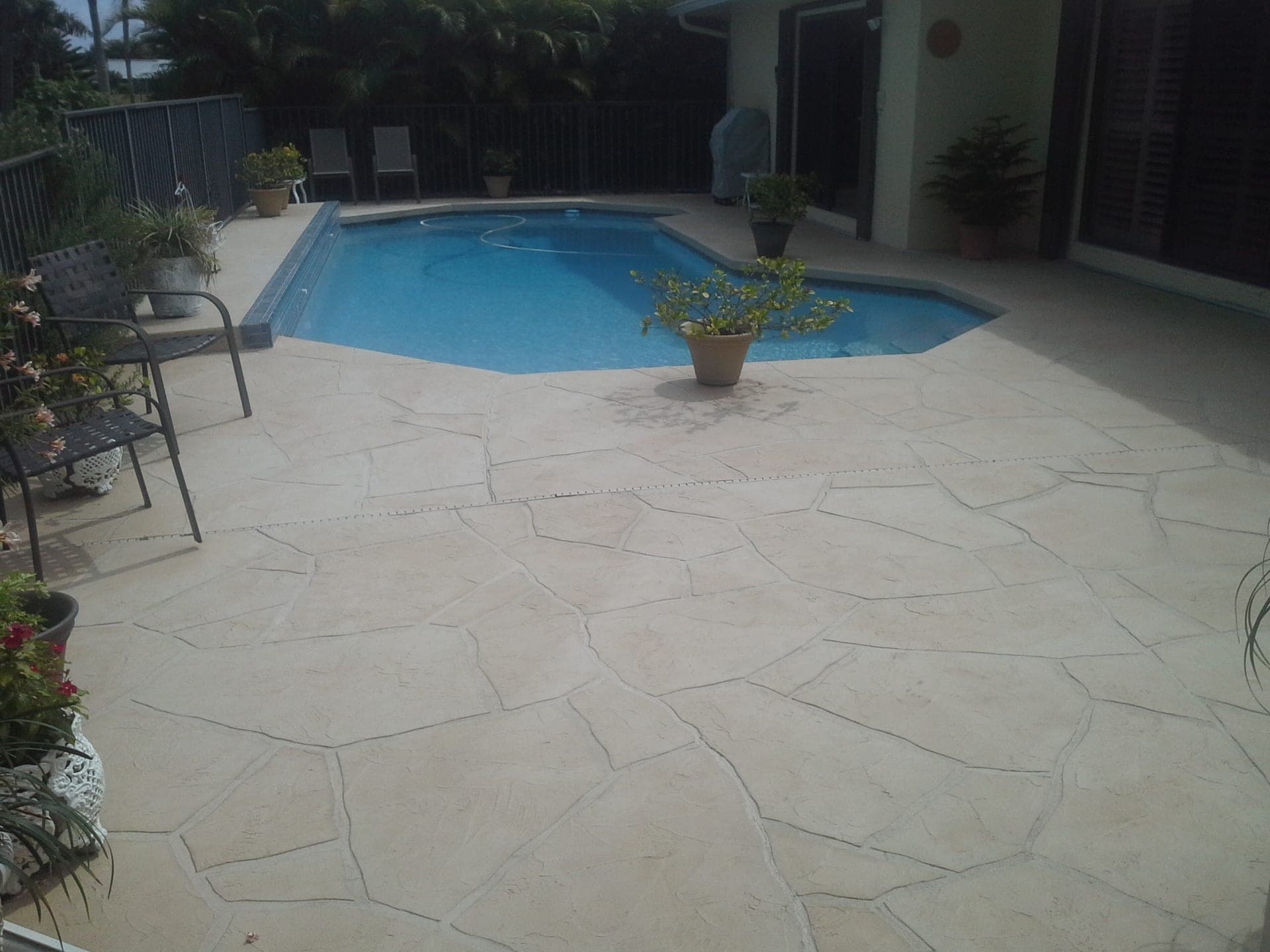
Sealed 800 sq ft of pool deck with polyurethane sealer and non-slip texture additive. Prepped the surface by filling hairline cracks and removing algae buildup. Applied two coats for maximum durability around the pool.
West Palm Beach, FLOur Work
What's Included
- Surface evaluation and sealer selection
- Pressure washing and surface preparation
- Crack filling and minor repairs before sealing
- Professional sealer application with commercial equipment
- Penetrating sealers for driveways and plain concrete
- Acrylic sealers for stamped and decorative concrete
- Resealing schedule recommendations
- Maintenance and care guidance
Transformations
Complete outdoor living transformations
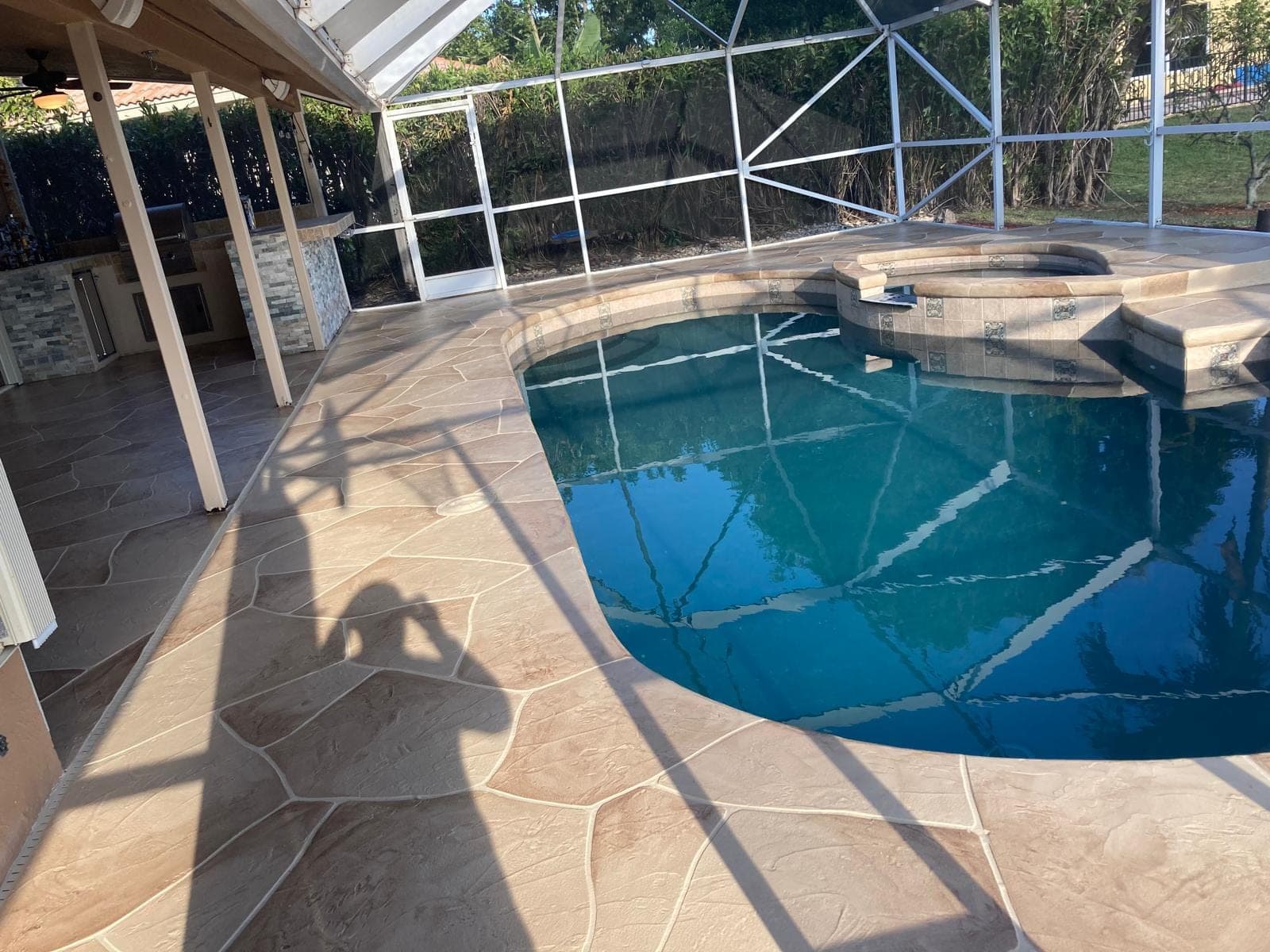
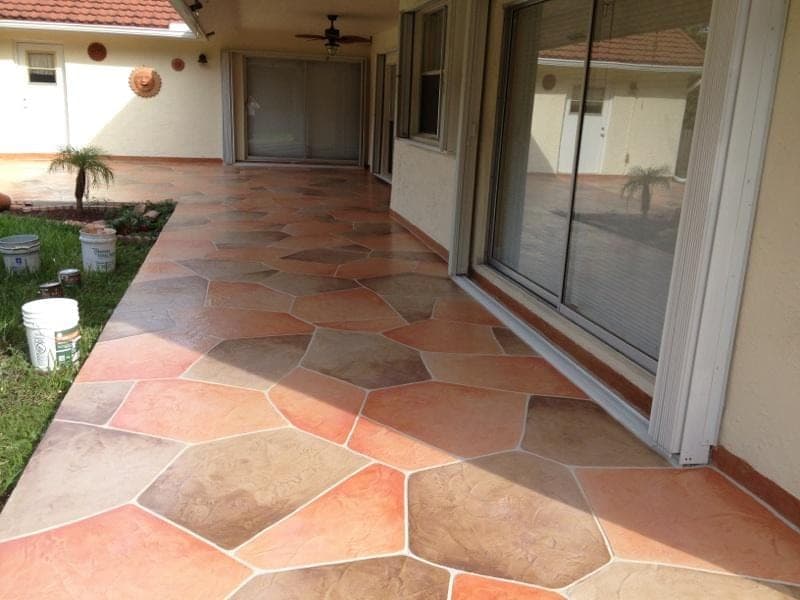
Pool decks designed for South Florida living
What Our Customers Say
“Outstanding work on our pool deck! Professional from start to finish. The cool deck finish is perfect for Florida.”
Michael R.
West Palm Beach
“The stamped concrete looks amazing and really elevated our home's curb appeal.”
Jennifer S.
Boca Raton
“Third time using Concrete Solutions. Consistent quality every time. Fair pricing and they stand behind their work.”
David M.
Jupiter
Explore More
Serving Palm Beach County
Professional concrete sealing services throughout South Florida, from Boca Raton to Jupiter.
Concrete Sealing FAQs
How often should concrete be sealed in Florida?
Every 2 to 3 years for decorative and stamped concrete, every 3 to 4 years for plain driveways. Pool decks may need sealing every 2 years due to water and chemical exposure.
What happens if you don't seal concrete in South Florida?
Unsealed concrete fades, stains, grows mold, and deteriorates much faster. Decorative finishes lose their color within 2 to 3 years. Sealing extends concrete life by 50 to 75%.
Can you seal old concrete that's never been sealed?
Yes. Older concrete benefits from sealing even without prior treatment. We pressure wash and prep the surface first for proper adhesion.
How long after pouring should new concrete be sealed?
Wait at least 28 days for full curing. Sealing too early traps moisture and reduces effectiveness.
Will sealing make my concrete slippery?
Not if the right product is used. We add non-slip additives for pool decks, walkways, and entries.
How much does concrete sealing cost?
Professional sealing in Palm Beach County runs $1.50 to $3.00 per sq ft including prep and application. A typical 600 sq ft driveway costs $900 to $1,800.
Do you offer online estimates?
Yes. Photos of the surface help us recommend the right sealer and provide a price range.
What's the next step?
Request a quote and we'll confirm sealer type, prep needs, and schedule.
Ready to Transform Your Outdoor Space?
Get a free, no-obligation quote from our expert team. We'll help you choose the perfect concrete solution for your property.
Free estimates • No pressure • Same-day response